
Realistic 2026 pricing ranges for Castle Rock homeowners planning a bathroom update
If you’re planning a bathroom remodel in Castle Rock or Douglas County, the biggest challenge early on is separating “internet averages” from what local projects actually cost once you account for labor availability, permit requirements, material lead times, and the condition of your home.
Below is a clear, homeowner-friendly budgeting guide based on current market ranges and the real cost drivers we see in Colorado bathrooms—so you can decide whether to get on a contractor’s schedule now or keep planning for a later season.
Quick cost ranges (Douglas County-friendly budgeting)
Most bathroom remodel budgets land in a range that reflects both scope (what’s being changed) and risk (what you might uncover behind walls/floors in a 1990s–2000s home, or older). In Colorado, many remodelers cite typical full bathroom ranges in the mid five figures for mid-range to nicer finishes, with smaller refreshes lower and luxury primary suites higher.
| Project type | What it usually includes | Common budget range |
|---|---|---|
| Cosmetic refresh / powder room | Paint, lighting, mirror, faucet, minor fixture swaps, simple flooring | Often $8,000–$20,000 depending on finishes and trades |
| Mid-range full bathroom | New vanity/top, toilet, tub/shower or shower rebuild, tile, ventilation updates, code-correct electrical | Commonly $18,000–$40,000+ |
| Primary suite / luxury bathroom | Custom tile, niche lighting, frameless glass, upgraded plumbing fixtures, and layout changes | Often $40,000–$80,000+ depending on complexity |
If you want a tighter budget range, the fastest way is to define your scope in one sentence: “Are we keeping the layout and just upgrading finishes, or are we moving plumbing and rebuilding the shower/tub area?” Layout stays put = fewer unknowns and a cleaner timeline.
What actually drives bathroom remodel cost (the “why” behind the numbers)
1) Plumbing changes (the biggest budget accelerator)
Moving a toilet, shower, or tub isn’t just “relocating a fixture”—it can mean new drain routing, venting, subfloor work, and inspections. If budget is your priority, keep plumbing locations the same and spend your money where you see it (tile quality, vanity storage, lighting).
2) Tile and waterproofing details
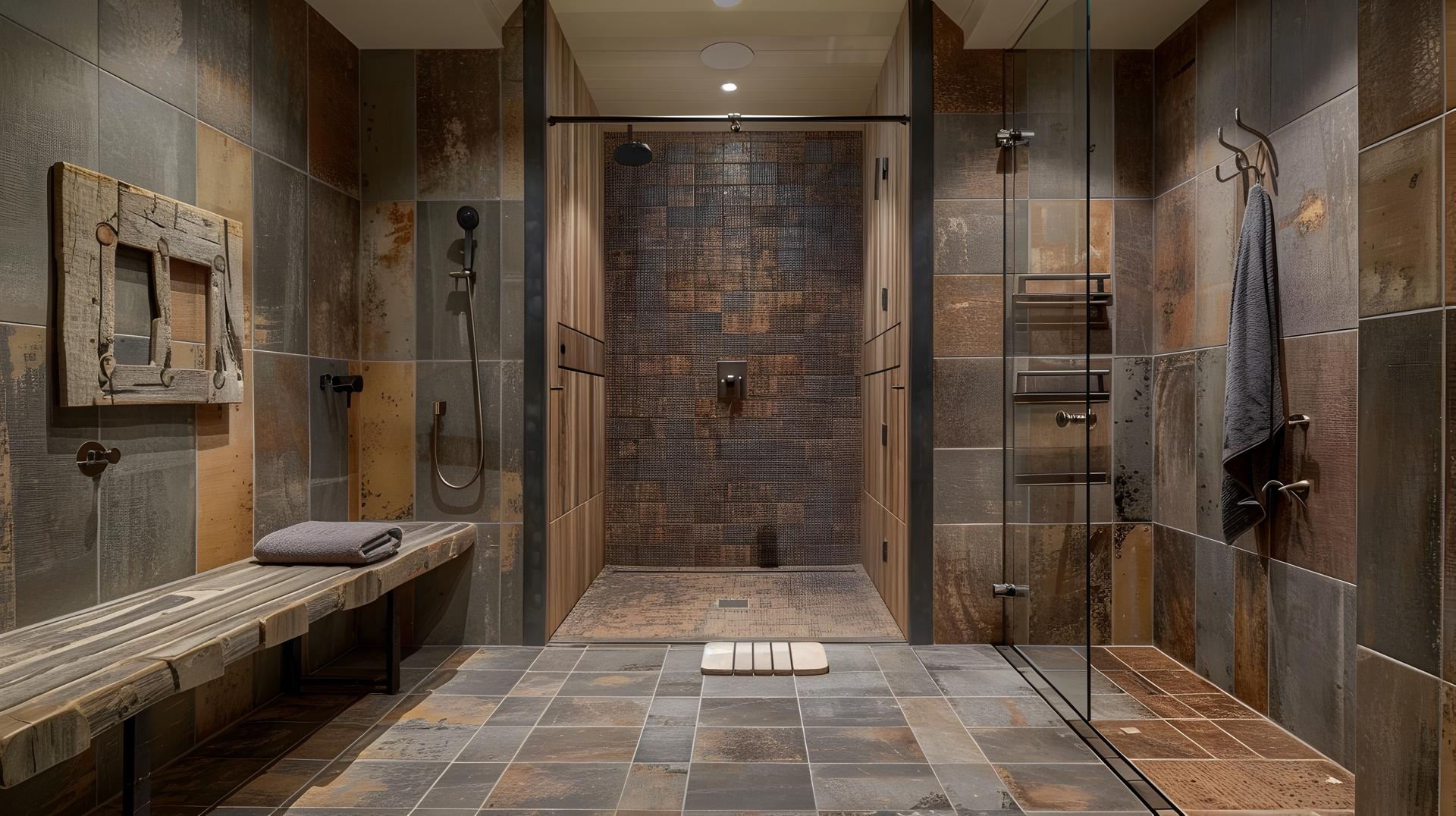
Custom tile showers require skilled labor and a properly built waterproofing system. Niches, benches, curbless transitions, and large-format tile can look amazing—but they add time, prep, and precision. A well-executed waterproofing system is one of the most valuable “invisible” upgrades in any bath.
3) Ventilation and code-correct electrical
Bathrooms are high-moisture spaces. Upgrading the exhaust fan, adding dedicated circuits/GFCI protection, improving lighting, and safely integrating heated floors or backlit mirrors can raise cost—but it reduces long-term issues like peeling paint, mildew, and nuisance breakers.
4) The condition of the “bones” behind the finish
Hidden water damage, undersized framing, old valves, or previous DIY work can change the scope quickly once demolition starts. This is why realistic budgets include a contingency (more on that below).
Step-by-step: how to budget a bathroom remodel (without guessing)
Step 1: Choose your scope level
Decide if this is a refresh (surfaces and fixtures), a full remodel (shower/tub area rebuilt), or a layout change (plumbing moved). The scope drives trades, permits, and timeline.
Step 2: Pick a finish “lane” (standard vs. premium) before you shop
The easiest way to blow a budget is to select premium items one-by-one without noticing how quickly they stack (frameless glass, designer fixtures, specialty tile, custom vanities). A contractor can help you set allowances so your selections stay aligned with your target number.
Step 3: Reserve a contingency (and label it)
For many homes, a 10%–20% contingency is a practical planning line item for the unexpected (subfloor repairs, valve replacements, insulation, venting changes). If you don’t use it, you keep it. If you do need it, you won’t be forced into cheap shortcuts mid-project.
Step 4: Align your schedule with material lead times
Vanity cabinets, specialty tile, and custom glass can extend a timeline. Planning early (late winter into spring) can help you secure a slot before summer schedules tighten and before you’re forced into “whatever is in stock.”
Where your money goes: a practical cost breakdown
While every project is different, bathrooms tend to be labor-intensive—multiple trades in a small space with waterproofing and finish precision. A typical split many homeowners see is:
| Category | Often includes | Planning share (common) |
|---|---|---|
| Labor & project management | Demo, carpentry, tile install, coordination, supervision | ~40%–60% |
| Materials & finishes | Tile, vanity, top, fixtures, lighting, paint, trim | ~25%–45% |
| Permits, inspections, specialty trades | Plumbing/electrical permits, inspections, custom glass, ventilation | ~5%–15% |
If a quote seems high or low, ask one question: “What assumptions are you making about what we’ll find after demolition?” That answer usually explains the difference between bids.
Castle Rock & Douglas County angle: permitting, inspections, and resale expectations
In Castle Rock, permits are a homeowner-protection tool: they create a record of compliant work and bring a third-party inspection into the process. The Town’s homeowner permit guidance also emphasizes verifying the correct permit authority and verifying that licensed trades (like plumbing/electrical) are in good standing.
Practically, this matters for two reasons:
Ready for a realistic bathroom remodel budget?
Prestige Contractors helps Castle Rock homeowners scope the work clearly, avoid surprise costs, and make selections that match real-world lead times. If you’re comparing options or deciding whether to move forward this season, we can start with a straightforward conversation and a transparent estimate.
FAQ: Bathroom remodel cost in Douglas County, CO
How much does a mid-range bathroom remodel cost in Douglas County?
Many homeowners planning a full mid-range bathroom remodel (new vanity/top, flooring, shower/tub updates, lighting, paint, and necessary plumbing/electrical) commonly budget in the $18,000–$40,000+ range. Layout changes, custom tile, and premium fixtures can push higher.
Is it cheaper to remodel if I keep the same layout?
Usually, yes. Keeping the toilet, shower/tub, and vanity in place reduces plumbing rework and unknowns behind the walls and subfloor. It also tends to shorten the construction schedule.
How long does a typical bathroom remodel take?
A straightforward bathroom remodel often runs a few weeks once construction begins, but real timelines depend on scope, inspection coordination, and material lead times (vanities, tile, and custom glass are common schedule drivers). Your contractor should provide a schedule that separates design/selection time from construction time.
Do I need a permit for a bathroom remodel in Castle Rock?
If you’re changing plumbing, electrical, ventilation, or anything structural, permits are commonly required. The safest approach is to confirm requirements early and ensure the correct permit authority is used for your address. A reputable contractor will help you navigate this.
What’s a smart contingency for an older bathroom?
A 10%–20% contingency is common for bathrooms where demolition could reveal water damage, subfloor issues, or outdated valves/wiring. If your home has a history of leaks or prior DIY work, lean toward the higher end.