
- A quieter kitchen starts with the right CFM—and the right plan for replacement air
- What “Range Hood CFM” Really Means (and why it’s often mis-sized)
- Colorado + Castle Rock context
- Did you know?
- Step-by-step
- Makeup air options (what homeowners in Castle Rock typically choose)
- Castle Rock remodeling tip
- Where this fits in your remodel scope
- Want help matching hood CFM to your layout (and avoiding makeup-air surprises)?
- FAQ
- Glossary
A quieter kitchen starts with the right CFM—and the right plan for replacement air
If you’re remodeling your kitchen in Castle Rock, Colorado, and finalizing an island layout, cooktop placement, or duct route, your range hood is not a “pick it at the end” decision. Hood CFM affects capture of smoke and grease, duct sizing, noise, energy use, and whether your project needs makeup air to pass inspection and avoid backdrafting. Castle Rock’s adopted codes are based on the 2018 International Residential Code (IRC) and related ICC codes, so common triggers like the 400 CFM makeup-air threshold matter during plan review and inspection.
What “Range Hood CFM” Really Means (and why it’s often mis-sized)
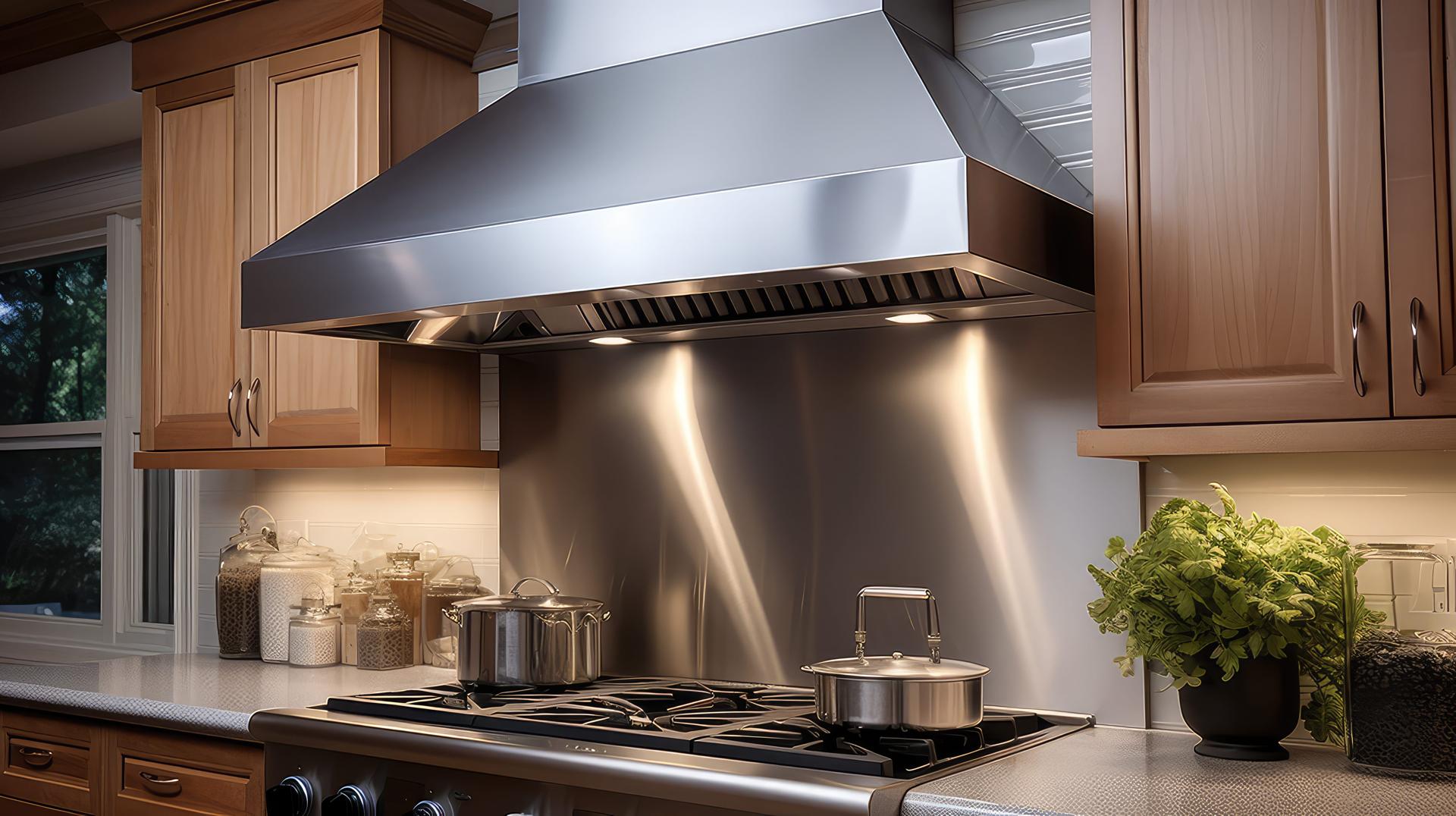
CFM (cubic feet per minute) is the amount of air your hood fan moves. Homeowners often shop by CFM alone, but performance depends on:
Capture efficiency (CE): How well the hood actually captures cooking pollutants at the source—this is why two “400 CFM” hoods can perform very differently.
Ducting reality: Long runs, too many elbows, undersized duct, or poor exterior termination can reduce real airflow and increase noise.
House pressure & safety: Large exhaust can depressurize the home, which can interfere with combustion appliances and fireplaces if replacement air isn’t addressed.
Colorado + Castle Rock context: code baselines that influence your design
| Design / inspection item | Why it matters in Castle Rock | Practical takeaway |
|---|---|---|
| Adopted code set | Castle Rock lists adoption of 2018 I-Codes (including IRC/IMC). | Plan your hood, duct route, and makeup air like it will be reviewed—not improvised. |
| 400+ CFM “makeup air” trigger | Many jurisdictions using the IRC enforce makeup air for domestic kitchen exhaust above 400 CFM (and require it to be interlocked). | If you want 600–1200 CFM for pro-style cooking, budget and design for makeup air early. |
| Minimum kitchen local exhaust performance | ASHRAE 62.2 references a minimum 100 CFM intermittent kitchen range hood exhaust. | Even “basic” hoods should be properly ducted outdoors and meet functional minimums. |
Note: Final enforcement details can vary by project scope and permit type. The cleanest path is aligning the hood selection, duct plan, and makeup air approach before drawings are finalized.
Did you know?
Recirculating (“ductless”) hoods can’t satisfy typical local exhaust requirements because they don’t exhaust pollutants outdoors.
ASHRAE 62.2 sets a common baseline of 100 CFM intermittent local exhaust for a vented range hood.
Once you move into higher CFM, the project becomes as much about duct design and replacement air as it is about the hood insert you choose.
Step-by-step: how to choose the right CFM (without creating a noisy, drafty kitchen)
1) Start with how you actually cook (not the “max CFM” on the box)
Frequent high-heat searing, wok cooking, griddles, and gas burners produce more heat and combustion byproducts, often benefiting from higher capture performance. If you mostly simmer and bake, you may not need a high-CFM system—especially if it pushes you into makeup-air complexity.
2) Prioritize capture area and installation height
A hood that’s too narrow or mounted too high can miss the plume even with “plenty of CFM.” For islands, good coverage matters even more because cross drafts and foot traffic can pull smoke away from the hood.
3) Decide early if you want to stay at or below ~400 CFM
Many remodels intentionally select a hood at or under 400 CFM to reduce the likelihood of triggering a required makeup-air system. If your cooking style and appliance choice truly need more, plan for makeup air instead of trying to “value engineer” it later (which can create inspection delays and uncomfortable drafts).
4) Treat ducting as part of the appliance selection
A high-performance hood needs a duct path that supports it—smooth duct, minimal elbows, correct diameter, and a good exterior cap. If the duct is undersized, the fan works harder, sounds louder, and moves less air than the rating suggests.
5) If you go above 400 CFM, design makeup air that won’t feel like a “cold wind”
Makeup air is replacement air brought in so the hood can exhaust properly and the home doesn’t become overly negative. Commercial standards emphasize controlling building pressure and interlocking exhaust with replacement air for safe operation and comfort.
Makeup air options (what homeowners in Castle Rock typically choose)
Simple dedicated makeup air duct + motorized damper (interlocked)
Common when you need a straightforward solution. The goal is predictable replacement air tied to hood operation (so you don’t accidentally exhaust without a path for air to enter).
Tempered makeup air (integrated with HVAC)
Adds comfort by reducing cold drafts in winter and improving distribution. This can be a good fit if you’re already updating HVAC or doing a larger remodel/addition.
Balanced ventilation strategy (whole-home)
In tighter homes, pairing kitchen exhaust planning with a whole-home ventilation approach can improve comfort and consistency—especially if you’re doing envelope upgrades (windows, air sealing) as part of the project.
Practical note: regardless of the strategy, good makeup air should be planned (where it enters, how it’s distributed, and how it’s controlled) so it supports the hood instead of creating whistling registers, door slams, or uncomfortable drafts.
Castle Rock remodeling tip: finalize hood + duct routing before cabinets are ordered
In many Castle Rock homes, the cleanest duct route is decided by framing constraints, beam locations, and where you can terminate outside without creating conflicts. If you’re adding an island, moving a cooktop, or opening walls, it’s the perfect time to design the duct path correctly—rather than “making it fit” after finishes are selected. Since the Town of Castle Rock publishes its adopted building codes, aligning early helps avoid rework and inspection hiccups.
Where this fits in your remodel scope
Range hood sizing and makeup air decisions are usually made alongside cabinetry layouts, appliance specs, electrical planning, and HVAC coordination. If you’re scoping a full kitchen update, start here:
Kitchen remodeling services — layout planning, ventilation coordination, lighting, and the behind-the-walls details that affect comfort and inspections.
Home additions & expansions — if your remodel includes a larger kitchen footprint, open concept changes, or structural work that affects duct routing.
Home maintenance program — helpful for ongoing filter changes, exterior vent checks, and small fixes that keep ventilation performing well long-term.
Want help matching hood CFM to your layout (and avoiding makeup-air surprises)?
Prestige Contractors can coordinate your hood selection, duct route, and mechanical planning so your kitchen looks right, ventilates well, and stays comfortable during Colorado winters.
FAQ: Range hood CFM & makeup air in Colorado remodels
Is 400 CFM always “enough” for a kitchen remodel?
Not always. 400 CFM can work well for many households—especially with a properly sized hood canopy and good ducting—but high-heat cooking or larger ranges may justify more. The key is balancing performance with duct feasibility and makeup air planning.
Do I need makeup air for my range hood in Castle Rock?
If your selected hood exceeds the common 400 CFM threshold used with the IRC, a makeup-air system is often required (and typically interlocked so it operates with the hood). Exact enforcement can vary, but it’s smart to assume this will be reviewed during permitting for a remodel that changes mechanicals.
Can I use a ductless/recirculating hood to avoid makeup air?
Ductless hoods can help with some odors, but they don’t exhaust moisture and combustion byproducts outdoors and generally cannot meet typical local kitchen exhaust requirements.
Why are some high-CFM hoods so loud?
Noise is often a duct problem: undersized ducts, too many elbows, long runs, restrictive wall caps, or poor transitions make the fan work harder. Choosing the right duct diameter and keeping the run smooth usually lowers noise more than swapping brands.
What’s the minimum ventilation requirement for a kitchen hood?
A common baseline referenced in residential ventilation standards is 100 CFM intermittent for a vented range hood.
Glossary
CFM: Cubic feet per minute—how much air a fan moves.
Makeup air: Replacement air intentionally introduced to offset exhausted air so the home doesn’t become overly negative in pressure.
Interlock: A control method that ties two systems together (for example, hood exhaust and makeup air) so they operate in coordination.
Capture efficiency (CE): A performance metric that describes how effectively a hood captures cooking pollutants.
Backdrafting: When exhaust pulls combustion gases (from a water heater, furnace, or fireplace) back into the home due to negative pressure risk.